
Buying guide
How to choose a drone
Eight criteria that really matter, budget benchmarks and the traps to avoid, so you buy once and buy well.
1. Weight, which decides the rules
Under 250 g (class C0), no exam is required and the free online training is only recommended. From class C1, it becomes mandatory. In every case, a drone with a camera must be registered on AlphaTango (France).
2. The sensor and the image
A 1-inch sensor, as on the Mini 5 Pro and the Air 3S, gives much better low-light images than a small sensor. Also check for a 3-axis gimbal, 4K at 60 or 120 frames per second and color profiles if you edit your videos.
3. Real-world flight time
DJI advertises 36 minutes for the Mini 5 Pro and 45 minutes for the Air 3S, measured in ideal conditions. In practice, count on a quarter less, and always keep a margin for the return. A second battery really changes the experience.
4. Obstacle sensing
Recent models see around themselves: the Mini 5 Pro and the Air 3S combine omnidirectional vision, a front LiDAR and a downward infrared sensor. It is reassuring for beginners, but it never replaces the pilot’s eyes.
5. Range: the one that counts
The advertised transmission reaches 10 km in Europe (20 km outside Europe) for both models. In France, you must keep the drone in direct line of sight: video range authorizes you nothing. Look instead for a good link quality to avoid dropouts.
6. Useful accessories
Extra batteries, ND filters to keep a natural video look in the sun, propeller guards, a fast microSD card, a hard case and a landing pad. Fly More packs often bundle the essentials.
7. Controller: with or without a screen
Some packs are sold with a controller without a screen (RC-N3: you use your phone) and others with a built-in screen controller (RC 2). Comfort is better with a screen, especially in bright sun.
8. The traps to avoid
A drone without an EU class mark can no longer fly in the open category since 2024. Some options exist only outside Europe: for example, the Mini 5 Pro’s Plus battery is not sold in the EU. Always compare the packs, not just the drones.
Which profile, which choice?
| Profile | Look for | Avoid |
|---|---|---|
| Beginner, travel | Light drone (under 250 g), automatic return | A big drone that stays in the bag |
| Demanding video | Large sensor, 3 axes, 4K 60 or more | A small sensor without a gimbal |
| Simple hobby | Stable model, obstacle sensing | Drones without an EU class mark |
| Reportage, real estate | Two focal lengths, flight time, several batteries | A drone without a Fly More pack |
| Professional use | See the professional drones guide | An unsuitable consumer model |
What budget to plan for?
| Level | Order of magnitude seen on amazon.fr in November 2026 |
|---|---|
| DJI entry level (Mini 3) | about €350 |
| High-end compact (Mini 4 Pro Fly More) | about €900 |
| Large sensor, dual camera (Air 3S) | about €1,000 bare, €1,260 to €1,340 in a Fly More pack |
Prices change often: always check them on the seller’s page before buying.
First drone? Also read Getting started with drones: nailing your first flight.
Two models put to the test
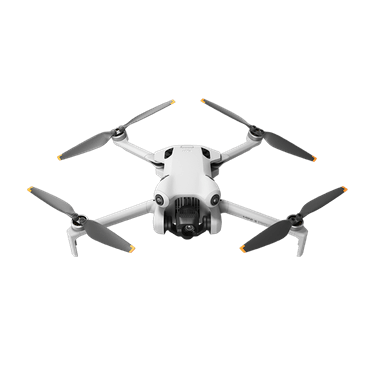 The lightest
DJI Mini 4 Pro
Specs: under 249 g, 1/1.3-inch sensor, 4K up to about 100 fps, about 34 min of flight, obstacle avoidance all around.
Pros: portability, polished image, stable flight, simple handling.
Cons: a single focal length, more caution in strong wind.
Reviewers: 9/10 at Clubic, 5 stars at Digital Camera World.
See on Amazon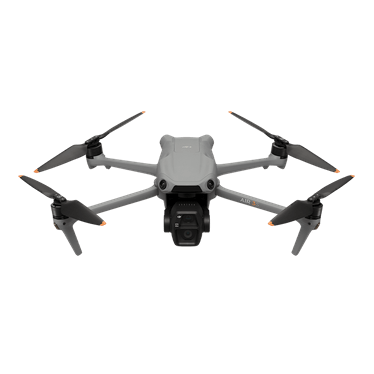 The most versatile
DJI Air 3S
Specs: 724 g (class C1), 1-inch sensor, two lenses, up to 45 min of flight, video up to 150 Mbps.
Pros: more accurate colors than the Air 3, better-controlled digital noise, two focal lengths, good stability.
Cons: heavier and more expensive than the Minis.
Reviewers: TechRadar finds it slightly more capable than the Air 3 and praises its handling in wind; Presse-citron highlights the image quality.
See on AmazonDetailed comparison and cited reviews: Mini 4 Pro vs Air 3. Sources: Presse-citron, TechRadar.
Frequently asked questions
Do you need a license to fly?
No, there is no license. However, registration on AlphaTango is required as soon as the drone carries a camera, and a free online training may be required depending on the class.
Mini or Air: which one to take?
The Mini to travel light with few constraints; the Air for two focal lengths, more flight time and a sturdier drone. The comparison details the gaps.
Do you need a second battery?
Yes, it is the first recommended purchase: you double your flight time without changing drone.
What about insurance?
Your liability may be engaged for damage to people or property: check that your liability insurance covers drone flying.
Where can you fly?
Check the restriction zones map on Géoportail before every flight and stay away from airfields and gatherings.
New or used?
New gives you the warranty and the right EU class mark. Used, check battery condition, the EU class and that the aircraft is no longer tied to another account.