
Water drones
Water drones: on and under the water.
Remote-controlled boats, surface drones and underwater robots: fishing, hull inspection, surveys, or simply the pleasure of seeing beneath the surface.
The families of water drones
Underwater drones (ROVs)
Tethered to the surface by a cable, they film live underwater. Brands like Blueye, Chasing or QYSEA (FIFISH) offer models from consumer to inspection grade. Look at cable length, lighting and stability.
Surface boats
Small remote-controlled boats to measure depths, check water quality or carry bait. Some carry a sonar.
Waterproof aerial drones
Water-resistant drones, like the SwellPro SplashDrone, film along the coast, drop bait or assist rescue.
Inspection
Hulls, quays, dams, bridge piers: an ROV often saves a first diver pass to assess the situation.
Autonomous navigation
Autonomous boats and sailboats for oceanographic research: a booming professional field.
The criteria that matter
| Criterion | Why | What to check |
|---|---|---|
| Depth | Underwater operating limit | Stated maximum depth and cable |
| Cable | Links the drone to the surface | Length, strength, reel |
| Lighting | Light runs out quickly underwater | Lamp power, adjustment |
| Camera | Image quality and stability | Resolution, recording, live view |
| Endurance | Length of an outing | Battery, recharge, spare battery |
Two ways to get started
Discover the bottom
A small ROV or a bait boat is enough to scout the bottom, watch marine life or place your lines.
Measure and check
Hydrography, structure inspection, hull checks: you look for robustness, sonar, measurements and reports.
On the water, navigation rules and local instructions apply (swimming zones, harbours, diving). An aerial drone remains subject to aviation regulations. Ask the maritime authorities in your area.
Choosing well in five questions
Above or below?
A surface boat carries a sounder and cameras. An ROV (tethered) explores the bottom and sends live video. Many projects need both.
How deep?
Maximum depth depends on the cable, waterproofing and pressure. Keep a margin: better a cable too long than a lost robot.
What kind of water?
In murky water the camera sees little: powerful lighting or an imaging sonar becomes more useful than a 4K camera.
What conditions?
Wind, current and waves limit use. Check thruster power and stability, especially at sea or on a river.
Where and how to take it?
Cable length, batteries, winch, launching: a light robot travels alone, a pro model needs a vehicle and a team.
Where are you allowed?
Water bodies, harbours, swimming zones and reserves have local rules. Ask the harbour master or the town hall, and think about the safety of other users.
From need to device
| Need | Device type | What to check |
|---|---|---|
| Discover the bottom, fishing | Small ROV or connected bait boat | Cable, lighting, camera |
| Inspect a hull or quay | Inspection ROV | Thrusters, stability, sonar |
| Map the seabed | Surface boat with sounder | GPS accuracy, processing software |
| Film from the air by the sea | Waterproof aerial drone | Waterproof rating, automatic return |
| Autonomous crossings | Autonomous boat | Strict maritime regulatory framework |
To get started
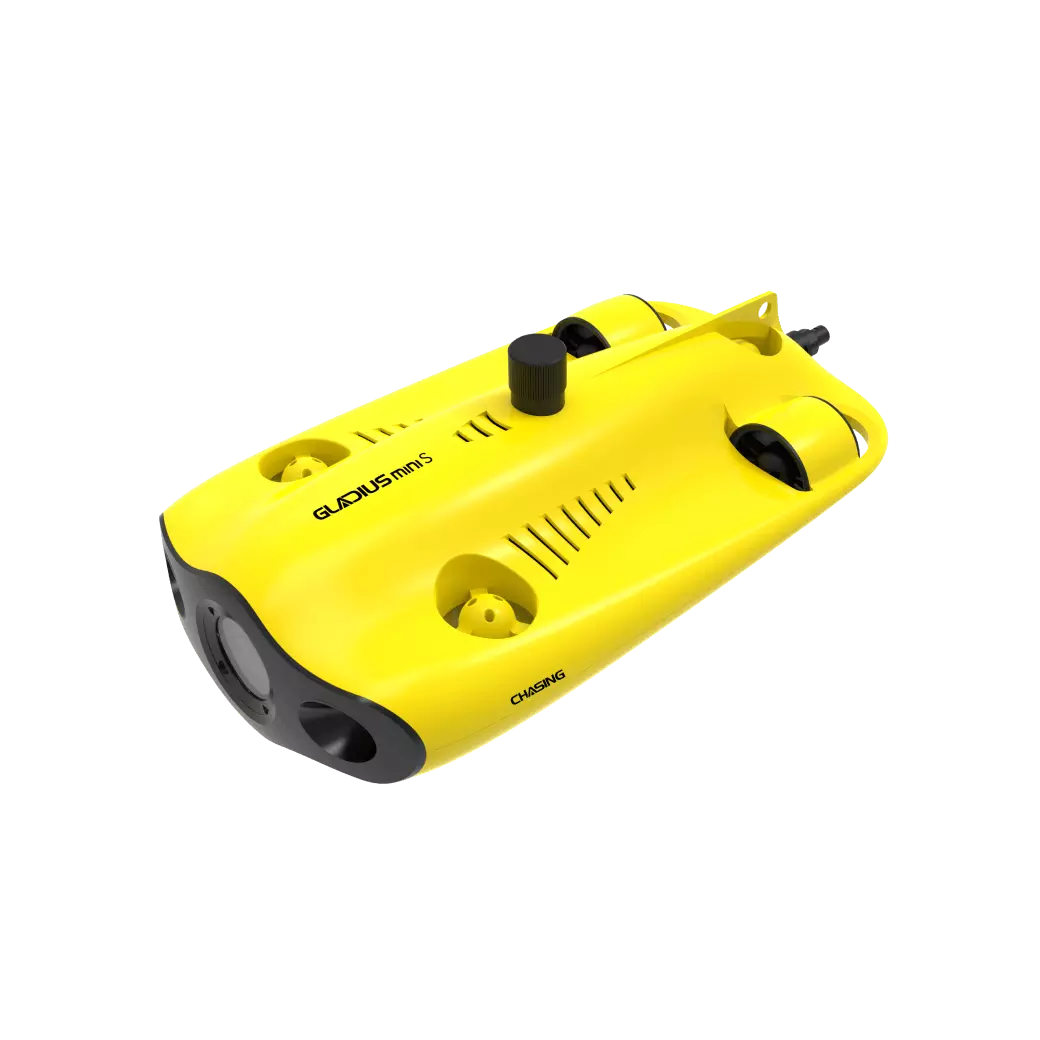 Underwater drone
Chasing Gladius Mini S
A small portable underwater drone to film beneath the surface, from freediving to inspecting a hull or a mooring.
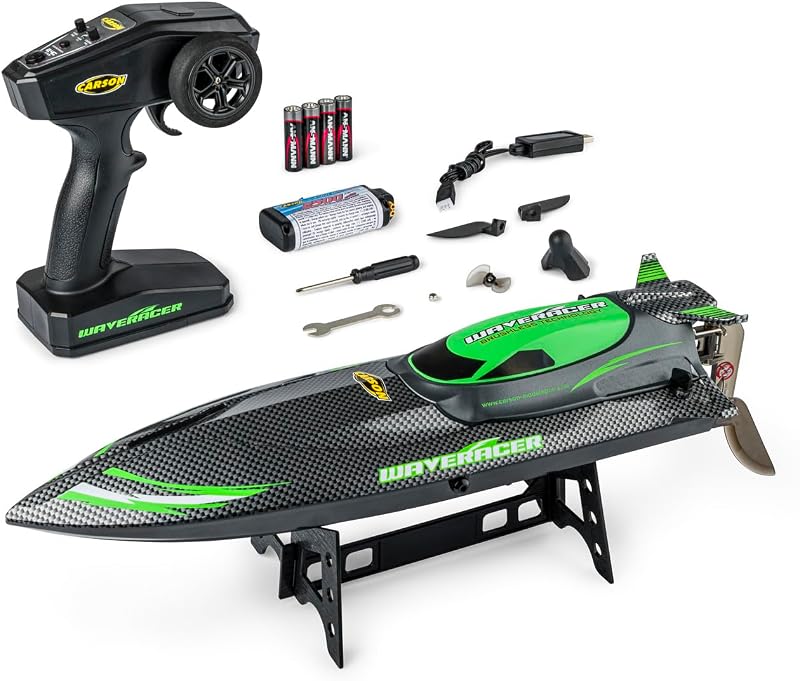 On the water
Carson Waveracer Brushless
A 2.4 GHz RC boat with a brushless motor, ready to run (RTR). Fast and responsive: try it on calm water, away from swimmers.
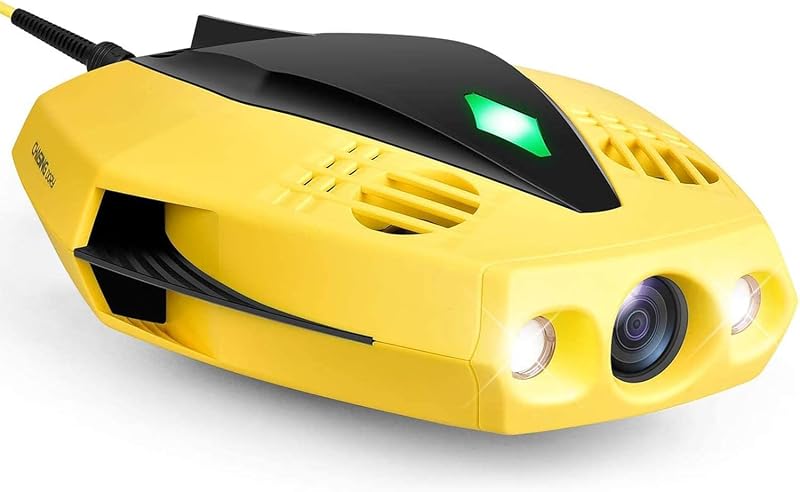 Underwater
Chasing Dory
A small tethered underwater drone with a Full HD camera. Compact, it is flown from a smartphone and suits freediving, harbours and shallow lakes.
Frequently asked questions
What exactly is an ROV?
A small uncrewed submarine tethered to the surface by a cable that carries power, control and video.
Can an aerial drone go over water?
Yes, but a fall into the water is often fatal if it is not waterproof. Keep altitude, battery and a return plan.
Is training required?
For leisure, no general exam: familiarisation and caution. For professional use, depending on the activity and place, qualifications may apply.
How do I protect my gear?
Rinse with fresh water after use at sea, dry it, check the seals and keep a spare battery.