
Ground drones
Ground drones: robots that roll, walk and inspect.
A ground drone moves along the ground with no pilot on board. It is used where a flying drone is forbidden, risky or too short on endurance.
What they are used for
Industrial inspection
Legged or tracked robots to cover industrial sites, tunnels and technical rooms. A Spot-type robot climbs stairs and clears obstacles; a tracked model is more stable with heavy payloads.
Agriculture and green spaces
Autonomous robots to monitor, weed or carry harvests along GPS-guided routes.
Security and patrol
Scheduled rounds with cameras and intrusion detection, day and night.
Research and training
Open platforms (Clearpath Jackal or Husky, AgileX, Unitree) to test autonomous navigation, often under ROS.
Logistics
Small transport robots in a warehouse or on a site, to move loads and parcels.
The criteria that matter
| Criterion | Why | What to check |
|---|---|---|
| Terrain | Wheels, tracks or legs depending on the ground | Maximum slope, climbable step height |
| Payload | Sensors, arm, tools | Supported weight, mounting points |
| Endurance | Real mission time | Swappable battery, charging time |
| Navigation | Remote-controlled or autonomous | LiDAR, mapping, obstacle avoidance |
| Protection | Dust, water, temperatures | IP rating, temperature range |
For leisure
RC cars
Crawlers, buggies, trucks: an excellent way in, with no particular procedure outside public roads.
Robotics kits
Small programmable robots to discover robotics and programming.
A robot that travels on public roads or films people raises traffic and data-protection questions. Get informed before taking it off your own site.
Choosing well in five questions
Where will it run?
Smooth warehouse floor, track, grass, stairs: the locomotion decides everything. Tracks go anywhere but use more power, legs clear steps but cost a lot.
What must it carry?
Sensors, arm, parcels: check the maximum payload and its effect on endurance, not just the robot’s weight.
How long a mission?
An inspection or patrol round is counted in hours. See whether batteries are swappable and whether a charging base exists.
Closed or open?
An open platform (ROS, for example) can be programmed freely, but takes skills. A turnkey robot deploys fast, with less flexibility.
Rain, dust, knocks?
The IP rating and temperature range tell you whether it handles your conditions. Also ask where the after-sales service is.
Where may it go?
On a private site, your safety rules apply. On public roads or near the public, local rules exist: get informed before rolling out.
From need to robot
| Need | Robot type | What to check |
|---|---|---|
| Security rounds | Autonomous wheeled or tracked robot | Cameras, lighting, alert feedback |
| Industrial inspection | Legged or tracked robot | Explosive atmospheres, stairs, thermal |
| Agriculture, mowing | Autonomous outdoor robot | Slope, precise GPS, plot edges |
| Logistics | Small transport robot | Payload, aisle mapping |
| Learning, teaching | Robotics kit or open platform | Documentation and community |
To get started
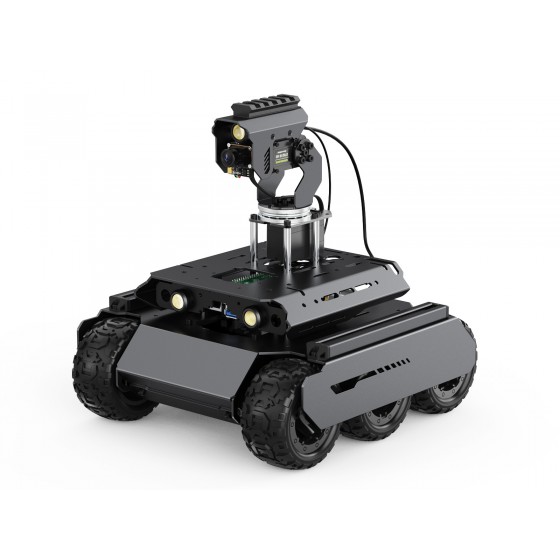 Open robot
Waveshare UGV Rover
A 6-wheel-drive robot with an all-metal body and computer vision, compatible with Raspberry Pi 4B and 5. A serious base for learning mobile robotics.
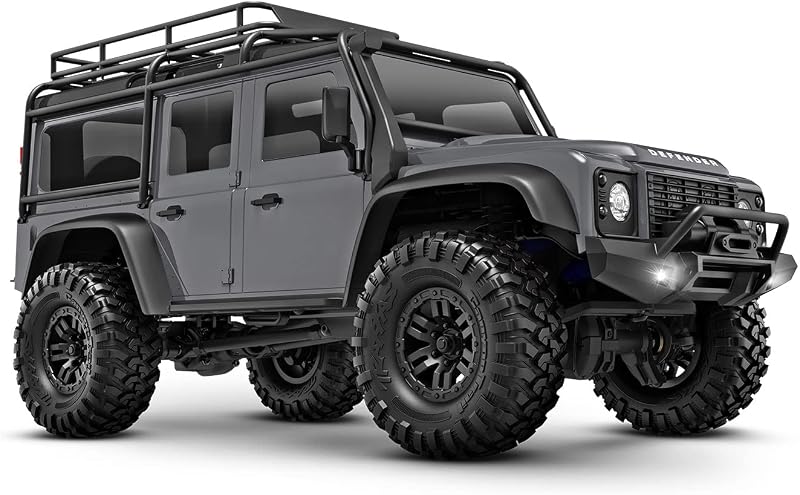 Leisure
Traxxas TRX-4M Land Rover Defender
A compact 1/18 crawler, sold with battery and charger. It climbs over rocks and roots and needs no training. A good way in to learn off-road driving.
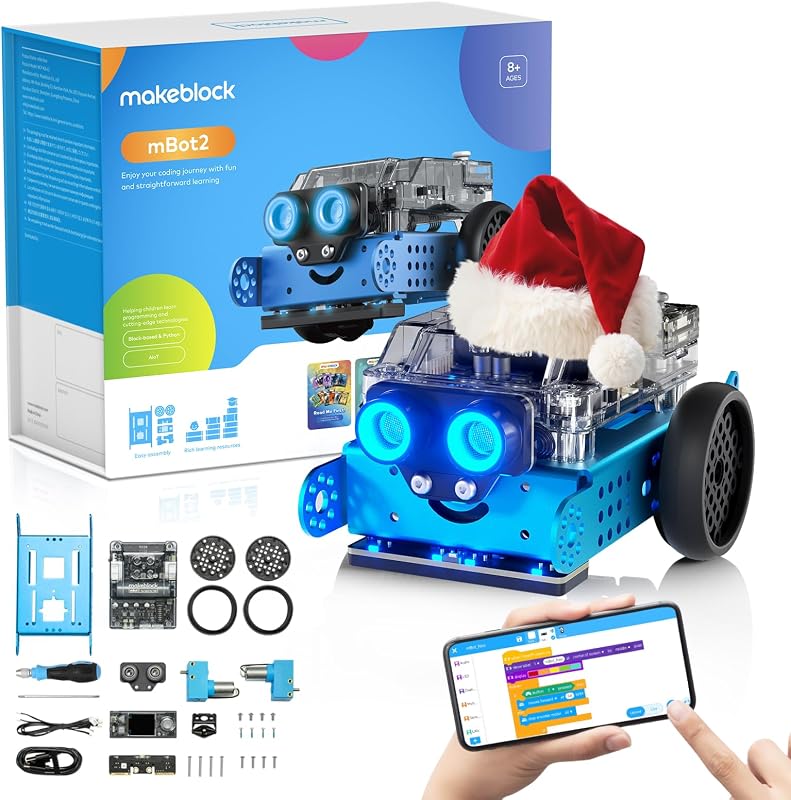 Learn
Makeblock mBot2
A small rolling robot programmable with Scratch and then Python. It follows a line, avoids obstacles and is a first step into robotics, at home or in class.
Frequently asked questions
Is a ground drone a robot?
Yes: it is a vehicle with no driver on board, remote-controlled or autonomous. The word “drone” is mostly used for professional uses.
Is training required?
No general exam as for flying drones, but the manufacturer often offers an introduction. On a professional site, the safety of people nearby remains your responsibility.
What budget should I plan?
From educational kit to inspection robot, the gap is very wide. Start from the need and the mission, then compare the full cost: payload, software, maintenance.
What about RC cars?
It is a hobby in its own right, with its own criteria: scale, motor, grip and spare parts.